Lufthansa Receives First Airbus A350-1000 as Airline Expands Its Long-Haul Fleet
Lufthansa has received its first Airbus A350-1000, marking the 700th Airbus delivery to the Lufthansa Group and celebrating 50 years of partnership between the companies. Named Deutschland, the 300-seat aircraft features Lufthansa's Allegris cabin and Starlink-powered Wi-Fi. It is scheduled to begin passenger operations between Munich and Tokyo on December 3, 2026, as part of the airline's wider fleet modernisation strategy.
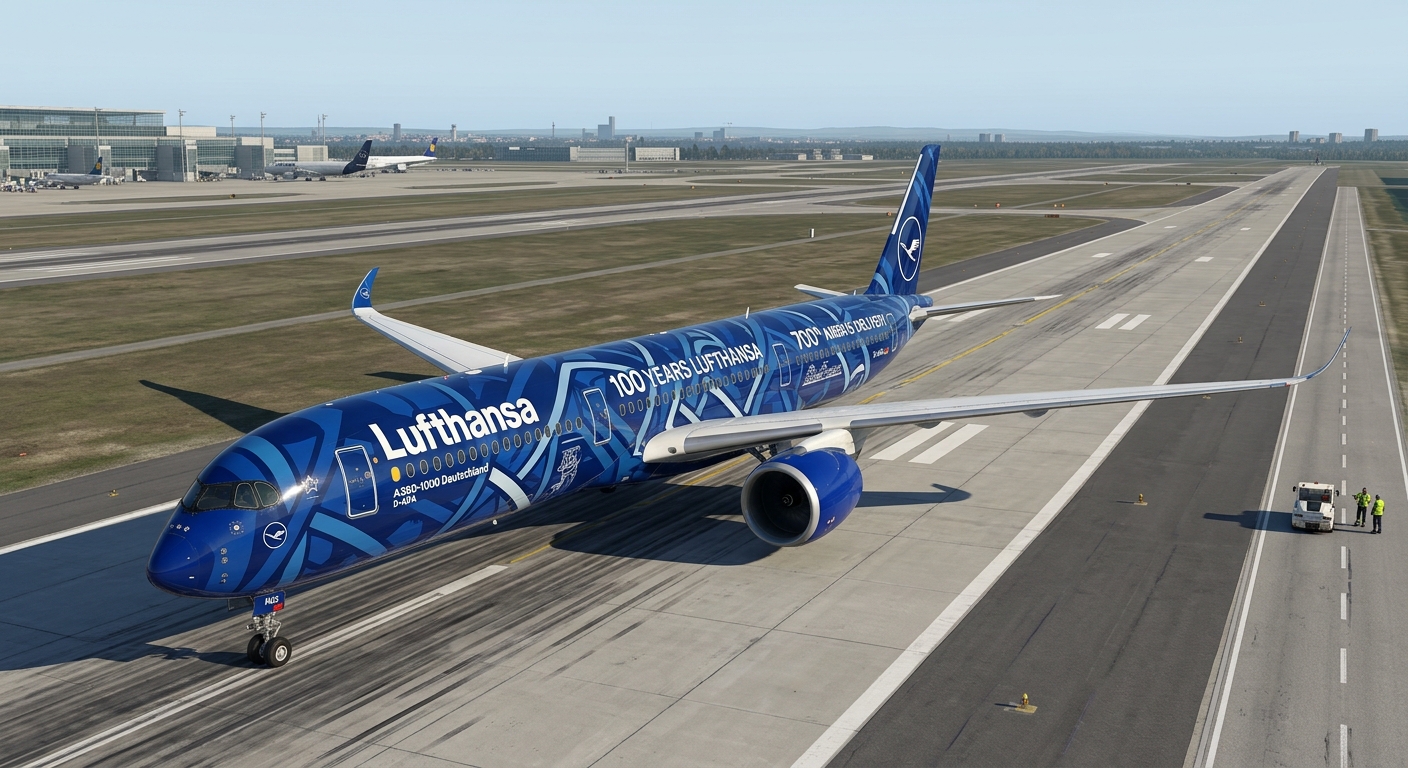
Lufthansa has taken delivery of its first Airbus A350-1000, marking a significant milestone in the airline's fleet modernisation programme and its 50-year partnership with European aircraft manufacturer Airbus.
The aircraft was handed over in Toulouse, France, on November 10, 2026. It also represents the 700th Airbus aircraft delivered to the Lufthansa Group, making the occasion particularly important for both companies.
Named "Deutschland" and registered D-AIFA, the new aircraft is expected to become one of Lufthansa's flagship long-haul planes. It will be based at Munich Airport and is scheduled to begin passenger operations on December 3, with its first planned commercial route connecting Munich and Tokyo-Haneda.
The delivery comes as airlines increasingly invest in more fuel-efficient aircraft, improved passenger experiences and modern onboard technology.
A New Flagship for Lufthansa
The Airbus A350-1000 is the largest member of Airbus's A350 family and is designed for long-distance international travel.
At 73.8 metres long, it is approximately seven metres longer than the A350-900, which Lufthansa already operates. Its larger cabin allows the airline to accommodate 300 passengers across four travel classes.
The aircraft will feature Lufthansa's Allegris cabin, the airline's latest premium travel experience.
Its seating configuration includes:
- First Class: 4 seats, including individual suites and a Suite Plus.
- Business Class: 49 seats, including eight suites.
- Premium Economy: 35 seats.
- Economy Class: 212 seats.
The configuration gives Lufthansa additional premium seating capacity while maintaining a substantial economy cabin.
The airline expects the aircraft to strengthen its Munich hub, particularly on long-distance routes connecting Europe with major Asian destinations.
Tokyo, Shanghai and Singapore Among Planned Destinations
Lufthansa plans to introduce the A350-1000 gradually into its international network.
Its first scheduled passenger flight is planned for December 3, 2026, connecting Munich with Tokyo-Haneda Airport.
Shanghai and Singapore are also expected to join the aircraft's destination network in the weeks following its introduction.
These routes are strategically important for Lufthansa because they connect its Munich hub with major Asian commercial and financial centres.
The airline's decision to deploy the aircraft on these routes also reflects the continued importance of long-haul travel to its international operations.
Lufthansa Group has ordered 15 A350-1000 aircraft, with deliveries scheduled through 2030. The first ten are intended for Lufthansa's main airline operations and will be based in Munich.
Better Fuel Efficiency and Lower Operating Costs
One of the major reasons airlines are investing in newer aircraft is the potential to reduce fuel consumption and operating expenses.
The Airbus A350-1000 combines advanced aerodynamics, lightweight materials and modern Rolls-Royce Trent XWB-97 engines.
According to Lufthansa, the aircraft can use up to 30 per cent less fuel per passenger while delivering significantly lower unit costs compared with older-generation aircraft.
Airbus also highlights the A350 family's efficiency improvements, including a 25 per cent advantage in fuel consumption and carbon dioxide emissions compared with previous-generation competitor aircraft.
For airlines operating long-distance routes, these improvements can make a meaningful difference to operating costs.
Fuel is one of the largest expenses in commercial aviation, and reducing consumption can help airlines manage costs while responding to increasing environmental expectations.
However, the actual savings achieved will depend on factors such as route length, passenger load, aircraft configuration and operating conditions.
Starlink Connectivity Comes to Lufthansa's Long-Haul Fleet
The new aircraft also introduces another important development for Lufthansa passengers: high-speed internet powered by Starlink.
The A350-1000 will become the first Lufthansa Group long-haul aircraft equipped with the company's new Starlink-powered Wi-Fi service.
The system is designed to provide faster internet connectivity during flights, supporting activities such as video streaming, cloud-based work and other online services.
Lufthansa says the service will be available free of charge to Miles & More members and Travel ID users across all travel classes.
The move reflects a wider transformation in passenger expectations. Travellers increasingly want the ability to remain connected throughout their journeys, whether they are working remotely, communicating with colleagues or accessing entertainment.
By introducing satellite-based connectivity, Lufthansa is seeking to bring the onboard internet experience closer to what passengers are accustomed to on the ground.
The airline has also outlined plans to expand Starlink connectivity across a much larger portion of its fleet.
A 50-Year Partnership Between Lufthansa and Airbus
The delivery also celebrates an important relationship in European aviation.
Lufthansa and Airbus began their partnership in 1976, when the airline received its first Airbus aircraft, an A300.
Five decades later, the partnership has grown into one of the most significant relationships between an airline group and an aircraft manufacturer.
The Lufthansa Group operates aircraft from several Airbus families, including the A220, A320, A330, A340, A350 and A380.
The group has also played an important role in the introduction of several Airbus aircraft models, including the A321, A320neo and A340-200.
The 700th delivery demonstrates the scale of that relationship and highlights the importance of European aircraft manufacturing to the continent's aviation industry.
Both companies have described the milestone as more than a commercial achievement, pointing to the role of European industrial cooperation in maintaining the region's position in global aviation.
What This Means for the Future of Aviation
Lufthansa's first A350-1000 delivery reflects several important trends shaping the airline industry.
First, fleet modernisation remains a priority as airlines look for ways to replace older aircraft with more efficient alternatives.
Second, passenger experience is becoming an increasingly important area of competition. Airlines are investing in improved cabin designs, premium seating, onboard entertainment and faster internet connectivity.
Third, environmental efficiency continues to influence aircraft purchasing decisions. Newer aircraft can help airlines reduce fuel consumption and emissions per passenger, although the overall environmental impact also depends on how aircraft are operated and how much capacity they carry.
For Lufthansa, the A350-1000 brings these priorities together in a single aircraft.
The airline now faces the task of integrating the new flagship into its operations, preparing its crews and maintaining the service standards associated with its premium long-haul network.
As more A350-1000s arrive over the coming years, the aircraft is expected to play an important role in the group's international expansion and fleet renewal strategy.
The first delivery is therefore not simply the arrival of a new aircraft. It marks another stage in Lufthansa's effort to modernise its long-haul operations and compete in an aviation industry increasingly shaped by efficiency, technology and passenger expectations.
Discussion (0)
Technical commentaryLeave a Reply
No comments yet. Be the first to share your thoughts!