Qantas Plans Nonstop Sydney–London Flights in 2027, Bringing a New Era of Ultra-Long-Haul Travel
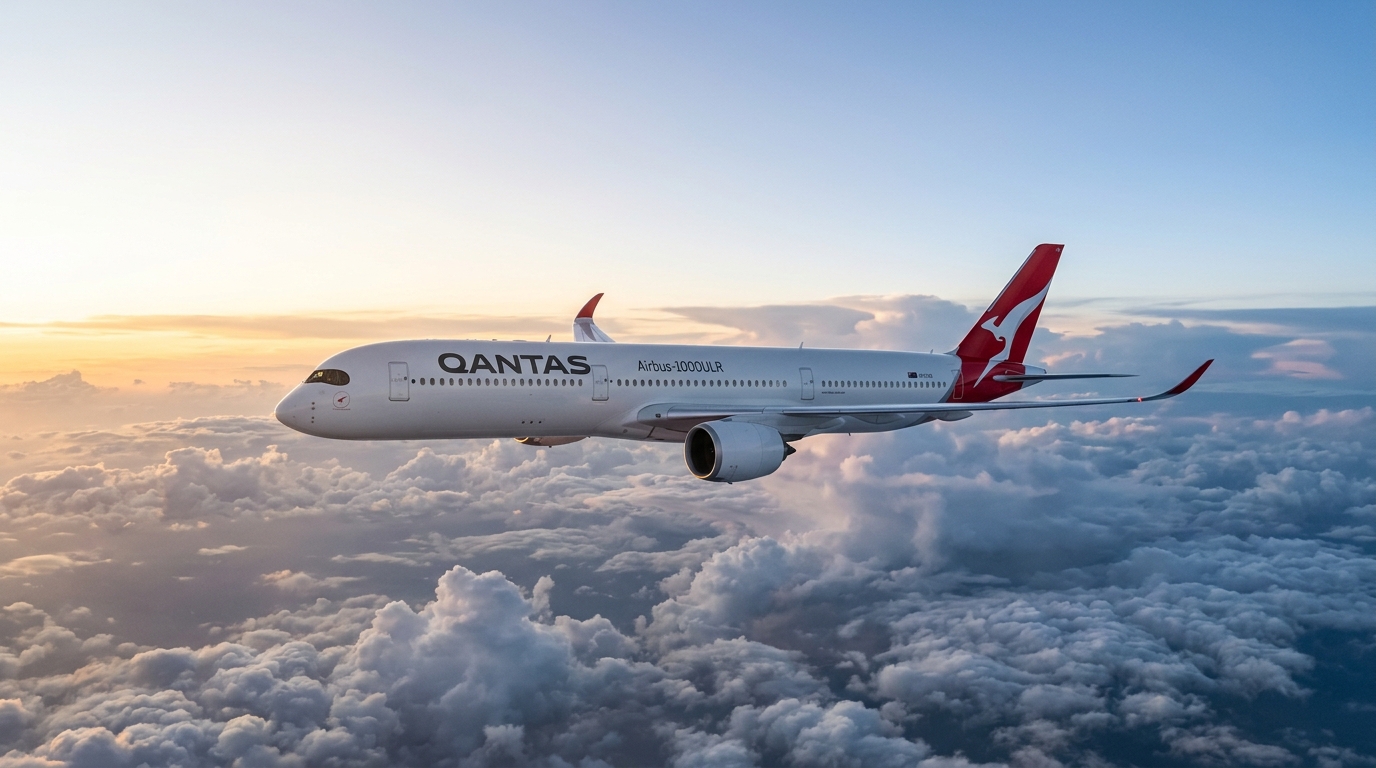
Qantas is preparing to launch nonstop Sydney–London flights in October 2027 through its ambitious Project Sunrise programme. Using specially configured Airbus A350-1000ULR aircraft, the airline expects to cut up to four hours from the journey while introducing a redesigned cabin focused on passenger comfort. The development could mark a significant change in ultra-long-haul aviation and the way airlines connect distant international destinations.
From Seven Stops to One Nonstop Journey
The Sydney–London route has a long history in Australian aviation.
When Qantas first introduced the Kangaroo Route in 1947, the journey took approximately four days and involved seven stops. Passengers travelled through destinations including Darwin, Singapore, Calcutta, Karachi, Cairo and Rome before reaching London.
Over the decades, advances in aircraft technology gradually reduced the journey time. Larger aircraft, more efficient engines and improved long-range capabilities made international travel faster and more accessible.
However, a nonstop connection between Australia's east coast and London remained a major aviation challenge.
Project Sunrise is designed to change that.
From October 2027, Qantas plans to operate daily nonstop Sydney–London flights using its specially configured Airbus A350-1000ULR aircraft. The service will take over the airline's iconic QF1 and QF2 flight numbers, which have historically been associated with the Sydney–London journey.
The existing Sydney–Singapore–London service will continue operating under new flight numbers, QF5 and QF6, allowing passengers to retain the option of a stopover.
The Aircraft Making the Journey Possible
At the centre of the programme is the Airbus A350-1000ULR, a specially configured ultra-long-range version of Airbus's A350-1000 aircraft.
The aircraft has been developed to operate flights exceeding 16,000 kilometres and lasting up to 22 hours without stopping.
One of its most important modifications is an additional rear centre fuel tank with a capacity of approximately 20,000 litres. This provides the extra fuel capacity required for exceptionally long routes.
The aircraft also benefits from the A350's modern aerodynamic design, advanced materials and fuel-efficient Rolls-Royce Trent XWB engines.
These features are important because operating a flight for such an extended period requires more than simply carrying additional fuel. Airlines must balance aircraft weight, fuel consumption, operating costs and passenger capacity.
Qantas has ordered 12 A350-1000ULR aircraft for Project Sunrise. The first aircraft is expected to be delivered in April 2027, ahead of the planned Sydney–London launch.
What Will the Passenger Experience Look Like?
A flight lasting close to 20 hours presents challenges that go beyond aircraft performance.
Passengers need opportunities to rest, move around and manage the physical demands of spending so much time in an aircraft cabin.
Qantas has therefore approached Project Sunrise as both an engineering project and a passenger-experience redesign.
Each aircraft will accommodate 238 passengers across four cabin classes:
- First Class: 6 seats
- Business Class: 52 seats
- Premium Economy: 40 seats
- Economy: 140 seats
The relatively low seat count reflects the airline's focus on providing additional space and comfort during the exceptionally long journey.
One of the most distinctive features will be a dedicated Wellbeing Zone.
The space is intended to give passengers an area where they can stand, stretch and move around during the flight. It forms part of a broader cabin design developed with research input from the University of Sydney's Charles Perkins Centre.
Lighting, seating, dining and cabin arrangements have also been considered to help passengers manage the effects of extended travel.
The aircraft will feature updated entertainment systems, high-speed Wi-Fi and Bluetooth connectivity, helping passengers stay connected throughout the journey.
These additions reflect a growing recognition that the success of ultra-long-haul aviation will depend on how comfortably passengers can complete the journey, not simply how far an aircraft can fly.
Project Sunrise Is Not Limited to London
Although Sydney–London is the first major route, Qantas has larger ambitions for the programme.
The airline also plans to introduce nonstop Sydney–New York services from mid-2028.
This would create another direct connection between Australia's east coast and a major international destination, reducing the need for passengers to travel through traditional connecting hubs.
For decades, international airlines have relied on major transit airports such as Singapore, Dubai, Doha and Hong Kong to connect passengers travelling between distant regions.
Ultra-long-haul aircraft could gradually change that model by allowing airlines to operate more direct routes between cities.
However, this does not mean connecting hubs will disappear. Stopovers remain useful for airlines serving multiple destinations and for passengers who prefer to break up long journeys.
Instead, Project Sunrise introduces another option for travellers who prioritise reaching their destination without changing aircraft.
Airbus Has Already Demonstrated the Aircraft's Long-Range Capability
The aircraft's development has also produced an important milestone during flight testing.
In November 2026, Airbus announced that the Qantas A350-1000ULR test aircraft had completed a flight covering 12,503 nautical miles, setting a new distance record for a commercial aircraft test flight.
The flight crossed three continents and two oceans, with the crew experiencing two sunsets and two sunrises during the journey.
Thirteen people were aboard, including Airbus test pilots and engineers, Qantas pilots and other technical personnel.
This was a test flight, not a passenger service. Nevertheless, it provided an important demonstration of the aircraft's long-range capabilities and the engineering behind Project Sunrise.
Airbus says the A350-1000ULR will support commercial flights of up to 22 hours, although actual journey times will depend on the route, weather conditions and operating requirements.
What This Means for the Future of International Aviation
Project Sunrise could influence how airlines approach long-distance international routes.
Traditionally, carriers have used connecting hubs to move passengers between distant parts of the world. This model allows airlines to combine travellers from different cities onto fewer flights.
However, improvements in long-range aircraft technology are creating opportunities for more direct services.
For passengers, the benefits are relatively straightforward:
- Fewer airport transfers.
- Less time spent waiting during stopovers.
- A more direct journey between major cities.
- More convenient connections for travellers with limited time.
For airlines, the business case is more complicated.
Operating an aircraft for nearly an entire day requires careful planning around fuel costs, crew scheduling, aircraft utilisation and passenger demand.
Ultra-long-haul aircraft also carry fewer passengers than some larger aircraft used on shorter international routes. Airlines must therefore ensure that ticket revenue can support the additional operating costs.
This means nonstop flights are not automatically cheaper. The main selling point is convenience and reduced journey time, rather than guaranteed lower fares.
Could Other Airlines Follow the Same Direction?
Qantas is not the only airline exploring the possibilities of longer nonstop flights.
Aircraft manufacturers have been developing more efficient long-range aircraft, while airlines continue to evaluate routes that could benefit from direct connections.
Airbus's A350 family and Boeing's 787 Dreamliner have already helped expand the range of destinations airlines can serve without stopping.
Project Sunrise takes this development further by focusing on some of the longest commercial passenger routes possible.
If the Sydney–London service proves commercially successful, it could strengthen the case for additional ultra-long-haul connections between major cities.
Nevertheless, the model will not suit every airline or route. Passenger demand, aircraft availability, airport infrastructure and operating economics will determine where such services make sense.
When Can Passengers Book the New Flights?
Qantas has scheduled the first nonstop Sydney–London services for October 2027.
Tickets are expected to go on sale in February 2027. The airline has also confirmed that its existing Sydney–Singapore–London flights will continue, giving passengers a choice between nonstop travel and a stopover.
The airline's Sydney–New York service is planned for mid-2028, with tickets expected to become available in August 2027.
These timelines remain subject to aircraft delivery, certification and the necessary regulatory approvals.
A New Chapter for the Kangaroo Route
For nearly 80 years, the Kangaroo Route has represented Australia's connection to Europe. What began as a multistop journey lasting several days has gradually evolved through successive generations of aircraft.
Project Sunrise marks another major step in that history.
By combining an ultra-long-range aircraft with a redesigned passenger experience, Qantas is attempting to make one of aviation's most demanding commercial routes a regular service.
The success of the programme will ultimately depend on more than engineering achievements. Passenger demand, operating costs and the ability to maintain a comfortable experience throughout the flight will all matter.
But the ambition is significant: a journey that once required seven stops could soon connect Sydney and London with a single flight.
AI and Digital Passports Are Changing How People Plan and Experience Travel
Next Dispatch →Gen Z Is Turning to Entrepreneurship as AI Reshapes Traditional Career Paths
Discussion (0)
Technical commentaryLeave a Reply
No comments yet. Be the first to share your thoughts!