AI and Digital Passports Are Changing How People Plan and Experience Travel
Artificial intelligence, biometric identification and digital passports are beginning to reshape how people plan trips and navigate airports. IATA's 2026 Global Passenger Survey found that 49% of travellers had used AI for travel planning, while 84% expressed interest in digital passports for online check-in. However, privacy concerns and complicated immigration requirements remain major challenges for the future of digital travel.
AI Is Becoming a Travel Planning Assistant
For years, planning a holiday often meant comparing airline websites, checking hotel prices, reading reviews and searching for activities across multiple platforms.
Artificial intelligence is beginning to bring some of those tasks together.
IATA's survey found that 49% of passengers had used AI for travel planning. The most common applications included:
- 21% used AI to search for flights to a specific destination.
- 19% used it to find cheaper flights.
- 17% used it to discover travel inspiration and possible destinations.
These findings suggest that AI is becoming a practical tool rather than simply a technology travellers are curious about.
A person planning a holiday can use an AI assistant to compare destinations, develop an itinerary, identify attractions, estimate travel costs and organise activities around a particular budget.
For airlines and travel companies, this creates a new challenge. Customers may increasingly discover flights and holiday packages through AI-powered conversations instead of visiting traditional travel websites first.
Airlines will therefore need to consider how their flight information, fares and services appear in AI-powered search experiences. They will also need convenient ways to turn recommendations into actual bookings.
However, AI-generated travel information still needs verification. Flight prices, visa conditions, hotel availability and entry requirements can change, so travellers should confirm important details with airlines, hotels and official government sources before making payments or travelling.
Biometric Technology Is Becoming More Common at Airports
Another major development is the growing use of biometric identification.
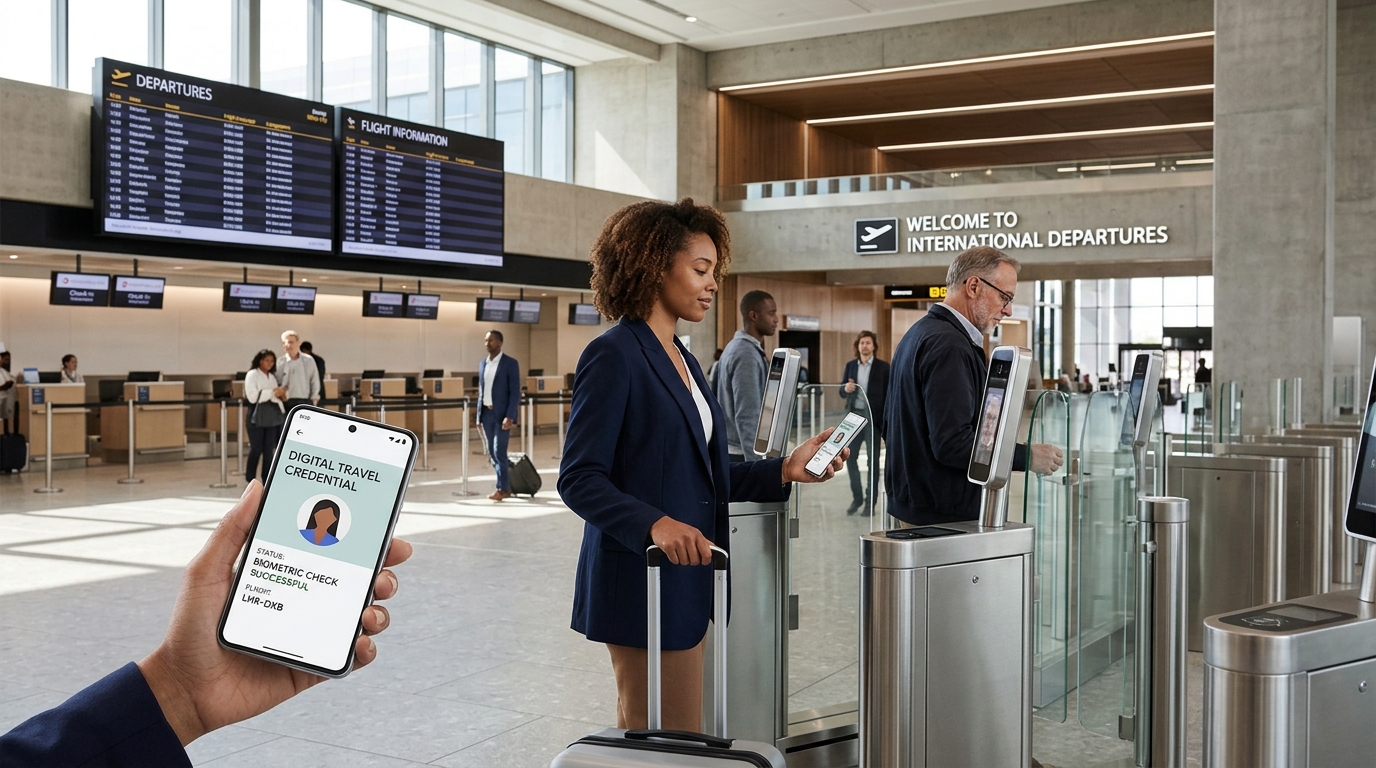
Biometric systems use physical characteristics, such as facial features or fingerprints, to verify a person's identity. At airports, these systems can help passengers complete identity checks without repeatedly presenting physical documents.
For example, facial recognition technology can be used at selected airport checkpoints to match a passenger against an existing identity record.
According to IATA, 58% of surveyed passengers had experienced biometric identification during an airport journey in the previous 12 months. This was an increase from 50% in 2025.
Passenger satisfaction is also high. Among those who had used biometric technology, 87% said they were satisfied with the experience.
The survey further found that 78% of respondents would be willing to share biometric information if it meant they could avoid repeatedly presenting their passport or boarding pass at airport checkpoints.
These figures suggest that travellers are becoming more comfortable with technology that reduces repetitive airport procedures.
However, biometric adoption still depends on airport infrastructure, airline systems and government regulations. Not every airport or international route offers the same services.
Digital Passports Could Make International Travel Easier
Digital passports are another area attracting significant interest.
Unlike a photograph or scanned copy of a physical passport, a secure digital travel credential is designed to contain verified identity information that can be securely presented and authenticated electronically.
The idea is to make it easier for travellers to share necessary information with airlines and border authorities without repeatedly completing the same processes.
IATA's survey found that 84% of passengers were interested in using a digital passport for online check-in instead of their physical passport.
Another 82% expressed interest in sharing digital passport information with an airline after booking, allowing the airline to provide more personalised services, including information about visa requirements.
The findings also indicate that passengers are interested in combining their digital passport, payment cards and loyalty information within a smartphone-based digital wallet.
Such a system could eventually make parts of the travel process more convenient, from booking a flight to completing airport formalities.
However, digital passports should not be confused with ordinary passport photographs stored on smartphones. Secure digital travel credentials require appropriate verification systems and acceptance by relevant authorities.
Physical passports also remain necessary wherever digital credentials are not supported or accepted.
Privacy and Data Security Remain Major Concerns
Despite growing interest in biometric technology, passengers have not abandoned concerns about how their personal information is collected and used.
IATA's survey identified three leading concerns:
- 59% were concerned about data breaches.
- 49% worried that their information could be shared with other organisations.
- 41% wanted greater clarity about how their personal information is handled.
These concerns are particularly important because biometric information is different from an ordinary password.
A password can be changed if compromised. A person's facial features or fingerprints cannot simply be replaced in the same way.
For this reason, organisations introducing biometric systems must consider how information is stored, protected, accessed and shared.
Passengers also need clear explanations of what information is collected, who can access it, how long it is retained and what alternatives are available.
The future of digital travel will depend not only on making journeys faster, but also on maintaining public confidence in the systems handling sensitive identity information.
Immigration Requirements Are Still Discouraging Travellers
One of the most significant findings in IATA's report concerns an issue technology alone cannot immediately solve: immigration requirements.
The survey found that 43% of passengers had been discouraged from visiting a destination because of its immigration requirements. This was an increase from 33% in 2025.
Among those discouraged by entry requirements, 53% said the process was too complicated. Privacy concerns and cost were each cited by 17%.
The findings suggest that travellers want more than faster airport check-ins. They also want clearer visa procedures, simpler applications and the ability to complete more immigration formalities before departure.
In fact, 86% of respondents said they were likely to share immigration information digitally before travelling if it would speed up the process.
Additionally, 60% preferred applying for visas online rather than visiting a consulate in person.
This presents an opportunity for governments to improve their immigration services through secure digital applications and more consistent verification procedures.
However, the availability of online visa applications and digital entry systems varies considerably between countries. A digital passport does not automatically grant entry to a destination or remove its visa requirements.
What the Findings Mean for African Travellers
The survey also provides an interesting regional perspective, particularly for Africa.
African respondents recorded an 89% overall satisfaction level with air travel. However, they were also the most likely to report being discouraged from visiting a destination because of immigration requirements.
According to IATA, 52% of African respondents said immigration requirements had discouraged them from travelling.
At the same time, 52% had used AI for travel planning, while 87% expressed interest in using a digital passport for online check-in.
These figures highlight an important opportunity for African aviation and tourism.
Digital identity systems, online visa applications and AI-powered travel services could help make international journeys more accessible and convenient.
For travellers in Nigeria and other African countries, however, the practical benefits will depend on which airlines, airports and immigration authorities support these technologies.
The ability to plan a trip using AI does not remove the need to check visa eligibility, transit requirements and official entry conditions before booking.
Airlines and Travel Companies Must Adapt
The growing use of AI and digital identity is likely to influence how airlines compete for passengers.
Travel planning is becoming more conversational, and passengers increasingly expect technology to help them find suitable flights, compare prices and make decisions.
Airlines that make accurate information accessible to AI-powered services may have an advantage as more customers begin their searches through these platforms.
At airports, biometric identification and digital credentials could help reduce repetitive checks and improve passenger processing.
Travel companies may also have opportunities to develop more personalised services by using verified customer preferences and travel information, provided appropriate privacy protections are in place.
However, successful adoption will require cooperation between airlines, airports, technology providers and governments. Digital identity systems need common standards if they are to work reliably across international borders.
The Future of Travel Will Depend on More Than Convenience
IATA's 2026 survey shows that passengers are increasingly open to using technology throughout their journeys.
AI is already helping people discover destinations and compare flights. Biometric systems are becoming more familiar at airports, while digital passports are attracting considerable interest.
Yet the findings also reveal that travellers want their personal information protected and immigration procedures made less complicated.
The next stage of travel technology will therefore involve balancing convenience with security, privacy and international cooperation.
The future airport may require fewer physical documents and fewer repeated identity checks, but building that experience will depend on earning the trust of the people using it.
China, Malta and Slovenia Emerge as Top Travel Destinations for 2027
Next Dispatch →Qantas Plans Nonstop Sydney–London Flights in 2027, Bringing a New Era of Ultra-Long-Haul Travel
Discussion (0)
Technical commentaryLeave a Reply
No comments yet. Be the first to share your thoughts!