Google Cloud Launches NVIDIA Vera Rubin AI Infrastructure: What It Means for Businesses
Google Cloud has made its A5X instances, powered by NVIDIA's Vera Rubin platform, generally available. The launch gives businesses access to advanced computing infrastructure designed for demanding AI workloads, including model training, AI agents and large-scale inference.
The competition to build more powerful artificial intelligence systems is changing the cloud computing industry. As AI models become more advanced and businesses begin deploying autonomous AI agents, the demand for computing infrastructure capable of handling increasingly complex workloads continues to grow.
Google Cloud is making another move in this direction.
On November 6, 2026, Google Cloud made its A5X computing instances, powered by NVIDIA's Vera Rubin NVL72 platform, generally available. The launch gives cloud customers access to a new generation of high-performance AI infrastructure designed for demanding workloads, including large-scale model training, inference and reinforcement learning.
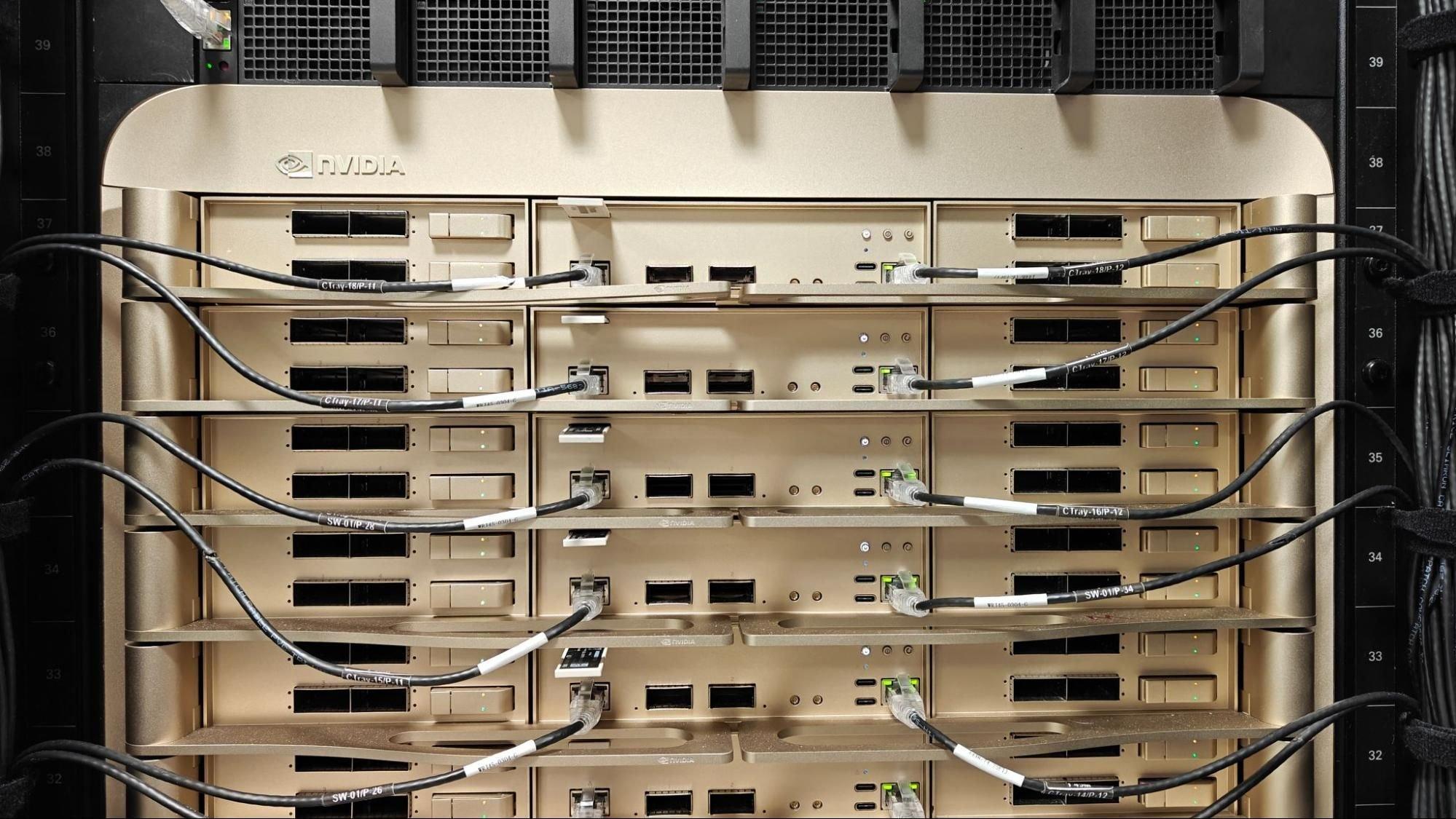
Rather than simply offering another generation of virtual machines, Google is bringing together advanced processors, high-speed networking, storage and liquid cooling in an integrated computing system.
The development is significant for businesses investing in artificial intelligence, particularly those building AI agents and applications that require substantial computing resources.
What is Google Cloud's A5X infrastructure?
A5X is a GPU-accelerated bare-metal computing offering available through Google Cloud's AI Hypercomputer platform.
It is built around NVIDIA's Vera Rubin architecture, which combines NVIDIA Vera CPUs with Rubin GPUs to support demanding artificial intelligence and high-performance computing workloads.
Unlike conventional cloud virtual machines, A5X instances provide direct access to the underlying server hardware through bare-metal infrastructure.
Each A5X instance includes four NVIDIA Rubin GPUs connected to NVIDIA Vera CPUs. Multiple instances can then be connected through NVIDIA's NVLink technology to form larger computing systems.
This architecture is designed to help businesses and AI developers handle workloads that require substantial processing power and fast communication between GPUs.
The platform combines several technologies:
- NVIDIA Vera Rubin: The central computing platform, combining Vera CPUs and Rubin GPUs.
- NVIDIA ConnectX-9 SuperNICs: High-speed networking hardware designed to move data between computing systems.
- Google Cloud Virgo Network: Google's networking infrastructure for connecting large GPU clusters.
- Advanced liquid cooling: Google's fourth-generation cooling technology, designed to manage the heat generated by high-performance hardware.
Together, these components form an integrated environment for large-scale AI computing.
Why NVIDIA Vera Rubin matters
NVIDIA's Vera Rubin platform is designed for the next generation of AI workloads.
As artificial intelligence systems become more capable, their computing requirements are also changing. Training large models, processing complex requests and running AI agents continuously can require enormous amounts of processing power.
The Vera Rubin architecture combines CPUs and GPUs to support these demanding workloads.
One important feature is its ability to connect multiple GPUs through NVIDIA's high-speed NVLink technology. This allows GPUs to communicate with one another more efficiently when working on large computing tasks.
According to Google Cloud's technical documentation, an A5X instance contains four Rubin GPUs, while an NVLink domain can connect up to 72 GPUs across multiple instances.
This makes the infrastructure suitable for workloads that benefit from large, interconnected GPU systems rather than relying on individual processors.
Google wants to support the next generation of AI agents
One of the most interesting aspects of this launch is its focus on agentic AI.
Traditional AI applications often respond to individual instructions. AI agents, however, can perform multiple connected tasks, use tools, evaluate results and continue working toward a larger objective.
These processes can require repeated model inference, data retrieval, computation and evaluation.
For example, an AI agent designed to develop software might need to examine a codebase, identify an issue, write a solution, run tests and review the results. Each stage requires computing resources.
When multiple agents perform these activities simultaneously, the infrastructure requirements can become substantial.
Google Cloud is positioning A5X to support this type of workload, alongside large-scale reinforcement learning and AI model training.
The goal is to provide the computing foundation businesses need to build and operate more sophisticated AI systems.
Businesses are already exploring the platform
Google Cloud and NVIDIA have highlighted early users of the A5X infrastructure.
One of them is Ineffable Intelligence, a London-based AI company founded by David Silver, known for his work on AlphaGo.
The company is using the platform for large-scale reinforcement learning research. Its work focuses on developing systems that can continually improve through experience.
This approach requires a continuous process of generating experiences, evaluating outcomes and updating models. The computing infrastructure must support these activities at scale.
Another notable example is WPP, the global marketing and communications company.
WPP demonstrated AI-powered creative workflows using A5X instances, NVIDIA Nemotron models and NVIDIA OpenShell.
These workflows allow AI agents to carry out multiple creative tasks, including video generation, image upscaling and visual restyling. Human approval remains part of the process before actions are executed.
In its initial tests, WPP reported that some workloads that typically required a multi-node cluster could run on a single A5X instance.
This illustrates how advanced computing infrastructure could help businesses bring more complex AI-powered workflows into their daily operations.
Google Cloud's infrastructure could scale considerably
Another important part of Google's announcement is the scale its networking architecture is designed to support.
Google says its Virgo Network can support clusters of up to 80,000 Rubin GPUs within a single site and as many as 960,000 GPUs across multiple sites.
These figures describe the architecture's planned scaling capabilities. They should not be interpreted as confirmation that Google already has that number of GPUs deployed and operating.
Nevertheless, the targets demonstrate the direction in which large-scale AI infrastructure is developing.
Building a powerful AI system is no longer just about installing faster processors. Data must move quickly between GPUs, storage systems and other computing resources.
Networking performance, cooling, power management and infrastructure coordination all become increasingly important as computing clusters grow.
Google's integrated approach is intended to address these requirements.
What does this mean for businesses?
The availability of A5X creates another option for organizations that need substantial computing resources for artificial intelligence.
Businesses developing large AI models, operating advanced AI applications or experimenting with autonomous agents may benefit from access to specialized infrastructure without having to build an entire GPU data centre themselves.
It could also help research institutions and technology companies experiment with more demanding workloads.
However, access to advanced infrastructure does not automatically make AI development affordable or straightforward.
High-performance GPU computing can be expensive, and businesses still need to consider infrastructure costs, data storage, networking, software compatibility and the expertise required to manage their workloads.
Google has not published a universal price for A5X in the announcement. Customers interested in deploying it need to contact Google Cloud for capacity and purchasing information.
Availability also depends on Google's supported regions and capacity arrangements.
Google is competing in a rapidly changing AI cloud market
Google is not the only company investing in next-generation AI infrastructure.
Microsoft Azure, Amazon Web Services and Oracle Cloud Infrastructure are also competing to provide businesses with powerful computing resources for artificial intelligence.
Oracle, for example, announced the general availability of NVIDIA Vera Rubin NVL72 systems on Oracle Cloud Infrastructure in October 2026.
This growing competition is important because businesses increasingly want access to advanced AI hardware without being restricted to building and operating their own infrastructure.
Cloud providers are responding by offering specialized computing platforms designed around the requirements of modern AI systems.
The competition is likely to extend beyond raw processing performance. Pricing, regional availability, data protection, networking and the ability to integrate AI workloads with existing business systems will also influence customer decisions.
Final thoughts
Google Cloud's A5X launch represents another step in the development of cloud infrastructure for artificial intelligence.
By combining NVIDIA's Vera Rubin platform with Google's networking, storage and cooling technologies, the company is providing a specialized computing environment for demanding AI workloads.
For businesses, the most important development is not simply the arrival of another powerful GPU platform. It is the growing availability of infrastructure capable of supporting more advanced AI applications, from large-scale model training to autonomous agents and complex creative workflows.
As AI adoption continues to expand, access to reliable and scalable computing infrastructure will become an increasingly important part of how companies build and operate their products.
The next phase of cloud computing may be shaped not just by how much data businesses can store, but by how efficiently they can process information and put artificial intelligence to work.
Microsoft Fixes 1,094 Security Flaws in November Update, Including Exploited Outlook Zero-Day
Next Dispatch →Hackers Exploit ScreenConnect Extension to Attack 48 Organizations
Discussion (0)
Technical commentaryLeave a Reply
No comments yet. Be the first to share your thoughts!