US-Russia Talks on Ukraine: Can New Diplomatic Efforts Bring the War Closer to an End?
US-led diplomatic efforts to end the Russia-Ukraine war have gained momentum following meetings between American envoys, Vladimir Putin, and Volodymyr Zelenskyy. Building on talks in Abu Dhabi, these discussions may lead to new negotiations with European representatives. Despite a major prisoner exchange, disputes over occupied territory and security guarantees leave a comprehensive peace deal unresolved.
Efforts to end Russia's war in Ukraine have gained renewed diplomatic attention following a series of meetings involving American, Russian and Ukrainian officials. However, despite fresh discussions and indications that negotiations could expand to include European representatives, major disagreements continue to stand in the way of a peace agreement.
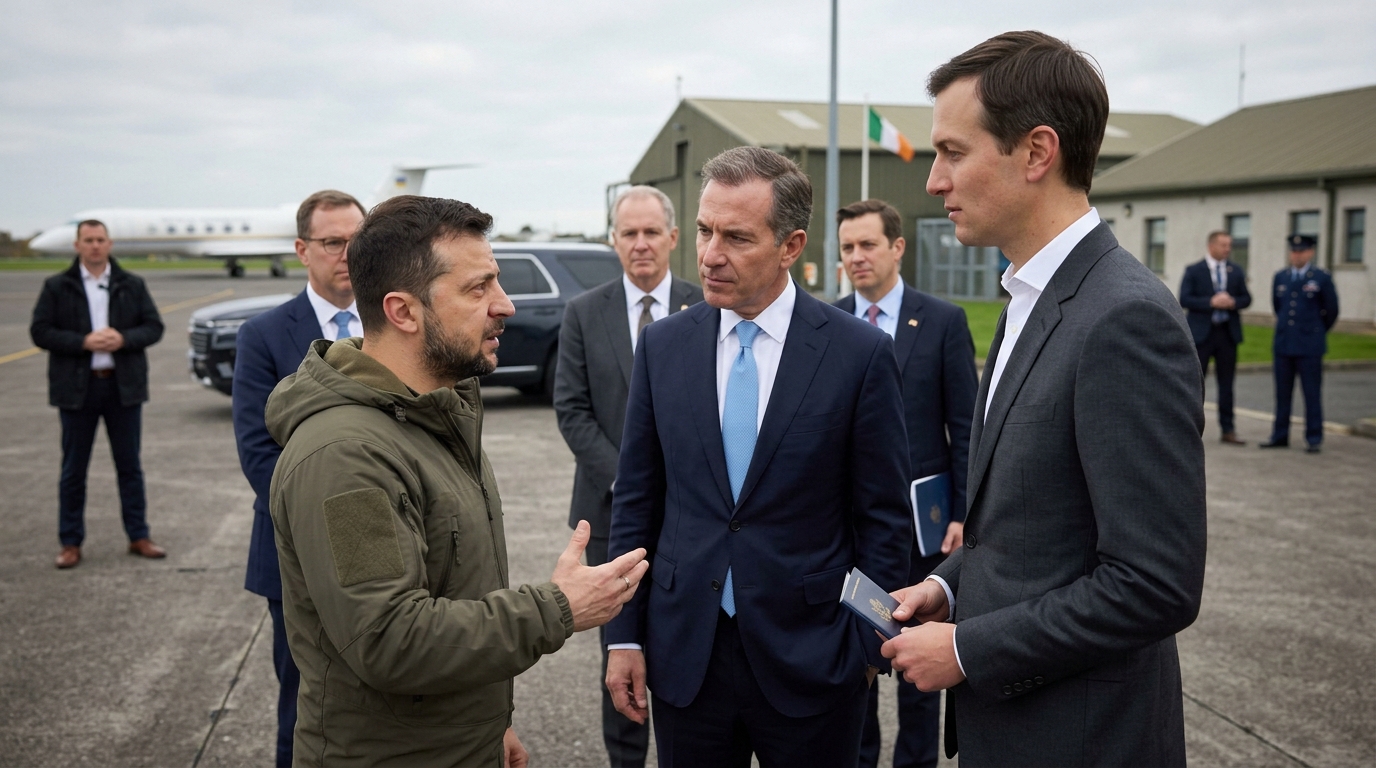
On November 12, 2026, US presidential envoys Steve Witkoff and Jared Kushner met Russian President Vladimir Putin in Moscow. The American representatives subsequently travelled to Dublin, where they met Ukrainian President Volodymyr Zelenskyy.
The meetings followed two days of US-mediated negotiations involving Russian and Ukrainian delegations in Abu Dhabi, United Arab Emirates. These discussions marked the first direct negotiations between the two sides in nine months.
Although the talks did not produce a comprehensive peace agreement, they renewed diplomatic engagement and resulted in progress towards another prisoner exchange.
US Envoys Meet Putin as Washington Revives Peace Efforts
The Moscow meeting was part of the Trump administration's renewed attempt to bring Russia and Ukraine closer to a negotiated settlement.
Witkoff and Kushner discussed the war with Putin for approximately two and a half hours. Their discussions covered territorial disagreements, postwar security arrangements and the possibility of involving European countries in future negotiations.
According to reporting from the meetings, the US representatives indicated that another round of talks had been scheduled and that European participation was expected to become part of the next phase.
The renewed diplomatic activity is significant because previous negotiations had struggled to produce progress on the most difficult questions surrounding the conflict.
However, the latest meetings should not be interpreted as evidence that a peace agreement is close. Both Moscow and Kyiv continue to hold substantially different positions on the conditions required to end the war.
The Biggest Obstacles: Territory and Security Guarantees
Territorial control remains one of the most difficult issues in the negotiations.
Russia continues to demand recognition of its claims over four Ukrainian regions it declared annexed in 2022: Donetsk, Luhansk, Zaporizhzhia and Kherson. Russian forces do not control all the territory claimed by Moscow.
Ukraine has repeatedly rejected demands to surrender its occupied territories as part of a peace settlement.
For Kyiv, accepting such conditions could leave the country vulnerable to future military pressure and undermine its sovereignty.
Security guarantees present another major challenge.
Ukraine wants credible arrangements that would discourage another Russian invasion if a ceasefire or peace agreement is reached. European countries have discussed the possibility of supporting Ukraine through security commitments, potentially including a postwar military presence.
Putin has rejected the idea of European troops being deployed in Ukraine after a ceasefire, describing such a deployment as unacceptable and warning that Russia would regard those forces as legitimate targets.
This disagreement highlights a central problem facing negotiators: Ukraine wants assurances that another invasion will not occur, while Russia opposes security arrangements it considers threatening.
Why Europe Wants a Place at the Negotiating Table
The diplomatic discussions have also raised an important question about Europe's role in determining the future of Ukraine.
European governments have provided Ukraine with military assistance, financial support and diplomatic backing since Russia launched its full-scale invasion in February 2022.
The outcome of any peace agreement would also have direct consequences for European security, defence spending, migration and the future relationship between European countries and Russia.
For these reasons, European leaders have argued that they must participate directly in negotiations rather than simply accept an agreement developed by Washington and Moscow.
The US envoys indicated that European representatives would be involved in the next round of discussions. Zelenskyy welcomed the prospect, arguing that a settlement affecting European security cannot be negotiated without European participation.
However, the precise arrangements for that involvement remain to be established. Russia has previously opposed European participation, arguing that European countries are directly supporting Ukraine's military effort.
The disagreement is therefore not simply about who attends the meetings. It concerns who gets to influence the security arrangements that could shape Europe for years after the war.
Prisoner Exchange Offers a Limited Sign of Progress
One tangible development from the recent diplomatic discussions concerns prisoners of war.
The Abu Dhabi negotiations produced an agreement for a major prisoner exchange between Russia and Ukraine. Zelenskyy subsequently described the planned exchange as potentially the largest of the war.
Prisoner exchanges have taken place at different stages of the conflict, providing opportunities for captured military personnel to return home even when wider peace negotiations have stalled.
Although such arrangements do not resolve the territorial or political disagreements between the two countries, they demonstrate that limited cooperation remains possible.
For families waiting for the return of captured soldiers, these agreements can have significant humanitarian importance.
The challenge will be translating limited progress on humanitarian matters into meaningful progress on a wider ceasefire and peace settlement.
The War Continues Despite Diplomatic Activity
While negotiations are taking place, fighting has not stopped.
Russia and Ukraine continue to exchange drone and missile attacks, with energy infrastructure, military positions and civilian areas remaining exposed to the conflict.
The continued fighting is a reminder that diplomatic meetings and battlefield developments are happening simultaneously.
Ukraine also faces concerns about the reliability of its security arrangements and access to technologies used in its military operations. Zelenskyy has raised concerns about disruptions affecting the Starshield satellite service used by Ukrainian forces.
These developments add another layer of complexity to the negotiations because any lasting settlement will need to address not only territorial control but also Ukraine's ability to defend itself.
What Happens Next?
The next round of negotiations is expected to involve European representatives, following discussions between the American envoys, Putin and Zelenskyy.
The immediate priorities are likely to include security guarantees, territorial disagreements, humanitarian arrangements and the conditions required for a ceasefire.
However, there are still significant questions about whether Russia and Ukraine can agree on terms that both governments would accept.
For the United States, the challenge is to maintain diplomatic engagement without allowing the process to become an agreement imposed on one side.
For Europe, the priority is to ensure that decisions about Ukraine's future do not undermine the continent's wider security interests.
For Ukraine, the central concern remains protecting its sovereignty and preventing another invasion.
The recent meetings have reopened diplomatic channels and created an opportunity for further discussions. Whether that opportunity leads to a meaningful breakthrough will depend on the willingness of all parties to address the disagreements that have kept the war going.
For now, the possibility of peace remains a subject of negotiation rather than an established outcome.
After the 2026 US Midterm Elections: The Growing Battle Over Congressional Investigations and Presidential Power
Next Dispatch →Nvidia Leadership Crisis Sparks US Congressional Scrutiny Over China Security Concerns
Discussion (0)
Technical commentaryLeave a Reply
No comments yet. Be the first to share your thoughts!