Global EV Sales Reach 2.09 Million in October
Global electric vehicle sales increased by 8% year-on-year in October 2026, reaching 2.09 million units. While Europe recorded strong growth and North America returned to annual expansion, China's domestic market remained under pressure. Chinese automakers are increasingly turning to overseas markets, setting the stage for greater international competition in the automotive industry.
According to Benchmark Mineral Intelligence, approximately 2.09 million electric vehicles were sold worldwide in October 2026. This includes battery-electric vehicles (BEVs) and plug-in hybrid electric vehicles (PHEVs) across the passenger-car and light-duty vehicle markets.
The figure represents an 8% increase compared with October last year. However, sales were down 3% compared with September, which had been a stronger month.
From January through October, global EV sales reached 17.5 million units, representing a 5% increase over the same period in 2025.
The distinction between annual and monthly growth is important. October's figures show that the market is expanding compared with last year, but they do not indicate that sales are increasing consistently every month.
Europe Emerges as a Major Growth Driver
Europe recorded one of the strongest performances in October, with electric vehicle sales increasing by 36% year-on-year to approximately 510,000 units.
Battery-electric vehicles were particularly strong, recording 49% annual growth. Plug-in hybrids also increased, although at a slower rate of 7%.
Germany was among the standout markets. Electric vehicles accounted for more than 45% of new car sales in the country, reaching their highest market penetration since December 2022. German battery-electric vehicle sales increased by almost 80% compared with October last year.
The United Kingdom also recorded a 30% increase in EV sales.
Several factors are supporting Europe's growth, including government incentives, a wider selection of electric models, rising fuel prices and emissions regulations encouraging the transition to lower-emission vehicles.
For automakers, the European market is becoming increasingly important. It offers opportunities for established manufacturers and new competitors seeking to expand their international presence.
China's Domestic Market Faces Pressure as Exports Increase
China remains the world's largest electric vehicle market, but its latest performance highlights a growing difference between domestic demand and international expansion.
Chinese EV sales declined by 12% year-on-year in October, although the decline was narrower than the 18% recorded in September.
Domestic competition, changing consumer demand and adjustments to government support have created a more challenging environment for manufacturers.
Rather than relying entirely on local buyers, Chinese automakers are increasingly looking overseas.
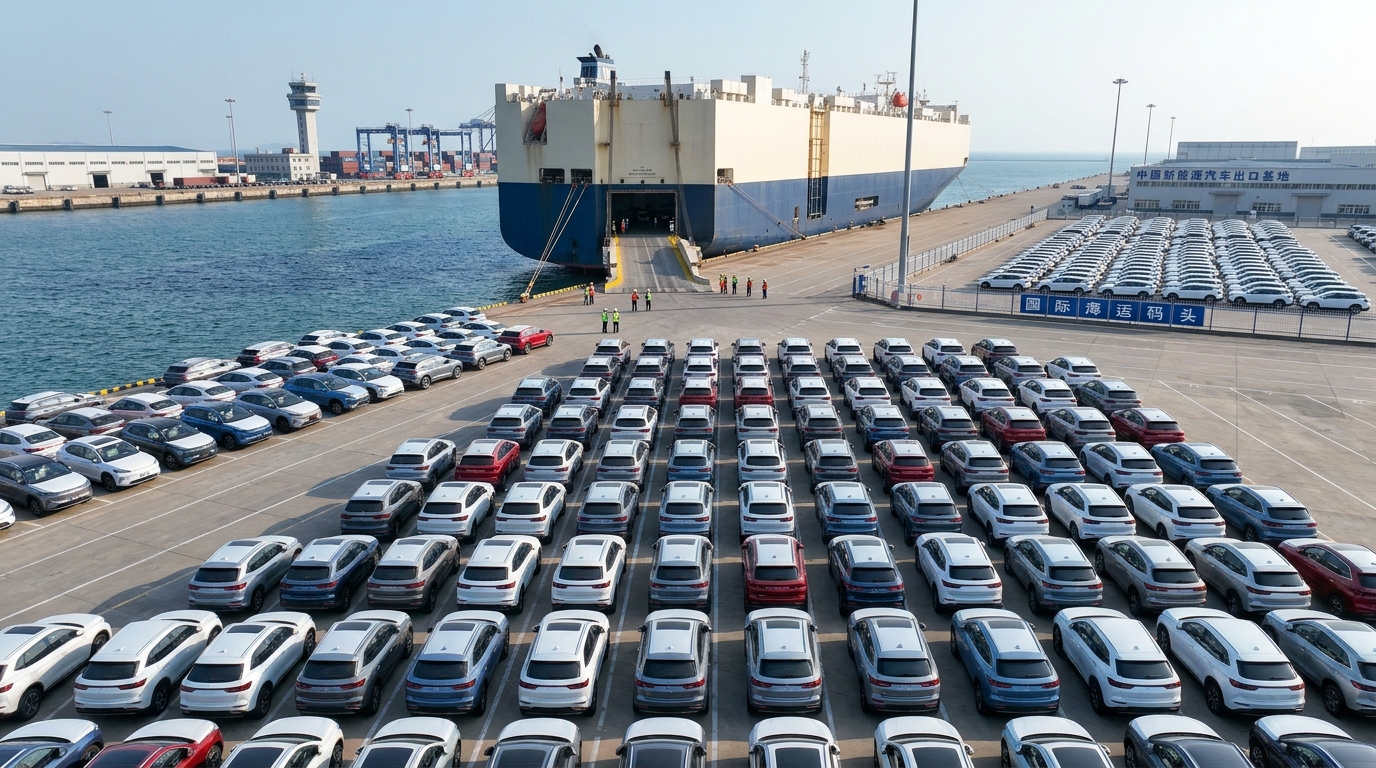
Passenger-car exports of new energy vehicles reached almost 600,000 units in October, setting another monthly record, according to Benchmark Mineral Intelligence.
This growing export activity is significant because Chinese manufacturers have developed extensive production capabilities, battery supply chains and increasingly competitive vehicle technologies. Overseas markets provide an opportunity to use that manufacturing capacity while reaching customers beyond China.
Brands such as BYD, Chery, SAIC and Geely are among the companies expanding their international ambitions.
However, international expansion is not without challenges. Trade restrictions, import duties, local manufacturing requirements and competition from established brands could influence how quickly Chinese manufacturers gain ground in different regions.
North America Returns to Growth, but the Recovery Needs Context
North America also returned to year-on-year growth in October, with electric vehicle sales increasing by 24%.
At first glance, this appears to be a strong recovery. However, Benchmark's analysis points to an important detail: October was the first month being compared with a period after the US federal EV tax credit had expired.
The expiration of that incentive had contributed to a sharp decline in American EV sales. As a result, the latest annual increase partly reflects a much lower comparison point.
US EV sales reached approximately 110,000 units in October. While the market has stabilised, Benchmark cautions that it has settled at a lower level rather than returned to its previous position.
This matters because incentives can influence purchasing decisions, especially when electric vehicles remain more expensive than some comparable petrol-powered alternatives.
The American market therefore presents a different challenge from Europe. Manufacturers must compete in an environment where consumer demand, affordability and government policy all play important roles.
What the Latest Figures Mean for the Automotive Industry
The October figures reveal more than a simple increase in electric vehicle sales. They point to a market that is becoming increasingly regional, competitive and internationally connected.
European growth is creating opportunities for manufacturers with attractive electric models. China's export expansion is increasing competition in overseas markets, while North America's performance demonstrates how government incentives can affect demand.
For traditional automakers, these developments create pressure to reconsider production costs, vehicle pricing, battery technology and international strategy.
The competitive landscape is also changing for newer manufacturers. Companies that can combine affordable vehicles, reliable battery systems, strong distribution networks and effective after-sales support may be better positioned to attract customers in multiple markets.
The shift is particularly important for markets where electric vehicle adoption is still developing. Greater international competition could eventually create more choices for consumers, although the actual benefits will depend on vehicle availability, import costs, charging infrastructure and local market conditions.
The EV Market Is Growing, but the Road Ahead Is Not Uniform
October's return to global year-on-year growth is encouraging for the electric vehicle industry. Yet the figures also show why a single global sales number cannot tell the whole story.
Europe is expanding rapidly, China's domestic market remains under pressure, and North America's improvement needs to be understood in the context of changes to federal incentives.
Meanwhile, Chinese manufacturers are increasingly using exports to reach customers in markets where demand is growing.
The next phase of the electric vehicle industry will not be determined by sales figures alone. Pricing, battery development, charging infrastructure, government policy and the ability to compete internationally will all influence which manufacturers emerge strongest.
For now, one thing is becoming clear: the competition for the future of the global automotive industry is increasingly being fought across international markets, not just at home.
CERN Finds Evidence of an Extremely Rare Particle Decay After a 42-Year Search
Next Dispatch →Nissan Cuts Petrol Car Production as China's Electric Vehicle Market Reshapes the Industry
Discussion (0)
Technical commentaryLeave a Reply
No comments yet. Be the first to share your thoughts!