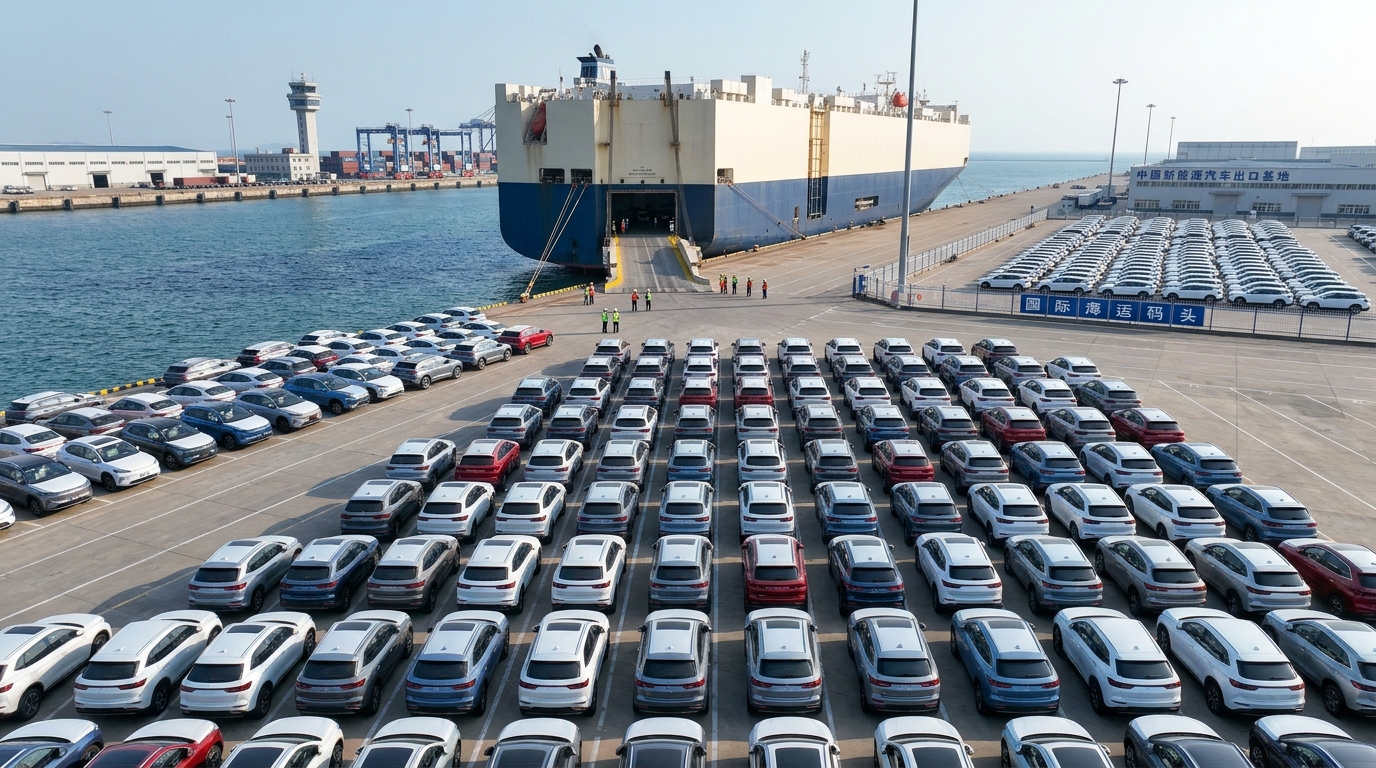
Nissan Cuts Petrol Car Production as China's Electric Vehicle Market Reshapes the Industry
Nissan is reducing petrol-car production in China as electric and hybrid vehicles gain popularity and competition from domestic manufacturers intensifies. The Japanese automaker has also lowered its global sales forecast for fiscal 2026, highlighting the growing pressure on traditional carmakers to adapt to the changing automotive market.
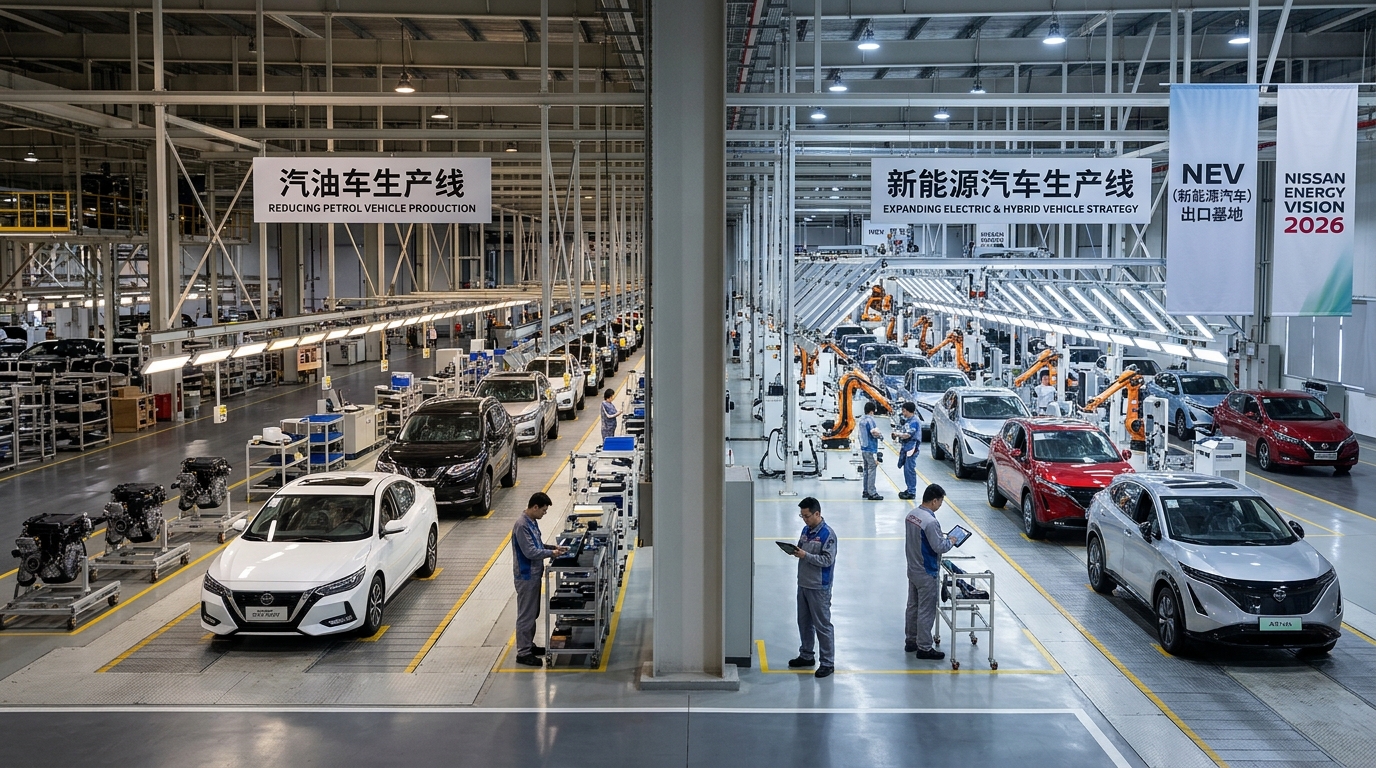
The global automotive industry is undergoing a major shift, and Nissan is facing a difficult reminder of how quickly that change can affect established manufacturers.
The Japanese automaker has announced plans to reduce petrol-car production in China while accelerating its electric and plug-in hybrid vehicle strategy. The decision follows weaker-than-expected sales, intensifying competition and a faster transition toward new-energy vehicles in the world's largest automotive market.
The pressure is already affecting Nissan's wider business. On November 11, 2026, the company lowered its global vehicle sales forecast for the financial year ending March 2027, reducing its expectation from 3.15 million vehicles to between 2.97 million and 3 million.
The development highlights a growing challenge for traditional car manufacturers: having a recognised brand and decades of production experience may no longer be enough to compete in markets where consumer preferences and vehicle technology are changing rapidly.
Why Nissan Is Changing Its Production Strategy
China has become one of the most competitive automotive markets in the world. Domestic manufacturers have expanded their electric vehicle offerings, improved their technology and competed aggressively on price.
For international manufacturers such as Nissan, this has created an increasingly difficult environment.
The company acknowledged that China's transition toward new-energy vehicles has happened faster than it anticipated. Its petrol-focused product range has struggled to keep pace with the changing preferences of Chinese buyers.
Nissan is therefore adjusting its production strategy. Rather than maintaining the same level of petrol-car manufacturing, it plans to reduce internal combustion engine production while expanding its new-energy vehicle portfolio.
This includes battery-electric vehicles and plug-in hybrids, which combine an electric motor and rechargeable battery with a petrol engine.
The change is not simply about introducing more electric models. It is about adapting manufacturing capacity to match what customers are increasingly choosing to buy.
China's Electric Vehicle Competition Is Getting Tougher
China's automotive industry has developed into a major force in global vehicle manufacturing.
Companies such as BYD, Geely, Chery and SAIC have expanded their electric and hybrid vehicle portfolios, giving consumers more choices across different price ranges.
Domestic manufacturers also benefit from a highly developed battery supply chain and a competitive manufacturing ecosystem.
This has intensified pressure on international brands that once enjoyed stronger positions in the Chinese market.
Price competition is another major factor. Manufacturers are competing aggressively for customers, making it harder to protect profit margins while maintaining sales volumes.
For Nissan, the consequences have become increasingly visible. The Guardian reported that the company's China sales fell 22% in the first half of 2026 and 32% during the first nine months, reflecting the difficult conditions it faces in the market.
The figures underline the scale of the challenge, although Nissan's wider financial results also show that the company is experiencing different conditions across its international operations.
Nissan Lowers Its Global Sales Forecast
The pressure in China has affected Nissan's expectations for the entire financial year.
The company now expects to sell between 2.97 million and 3 million vehicles globally in fiscal 2026, down from its previous forecast of 3.15 million.
Its second-quarter financial performance also showed how difficult the recovery remains. Operating profit for the July-to-September quarter fell 96% year-on-year to ¥2.1 billion, according to Reuters.
Nissan has been working to restructure its operations through its Re recovery programme, which includes cost reductions, factory-capacity adjustments and changes to its model lineup.
However, the company is still dealing with weak demand in China, higher costs and intense competition.
There are signs of stronger momentum in other markets. Nissan has reported improving performance in the United States and Japan, where its products continue to find customers.
That contrast is important. The challenge is not necessarily that every market is moving away from petrol vehicles at the same speed. Instead, manufacturers must adapt their strategies to the specific conditions of each region.
The Shift Is Bigger Than Nissan
Nissan's decision reflects a wider transformation taking place across the automotive industry.
Traditional manufacturers are being pushed to rethink how they design vehicles, manage production and compete with newer companies.
Electric vehicles have changed more than the type of engine used in a car. They have also changed the importance of batteries, software, vehicle electronics, manufacturing efficiency and supply-chain management.
Companies that can develop competitive vehicles quickly and produce them at attractive prices may gain an advantage over manufacturers that rely heavily on older product strategies.
This is particularly visible in China, where local manufacturers have built strong positions in electric and hybrid vehicles.
For established international brands, responding to this competition requires more than releasing an electric version of an existing model. They must understand local buyers, improve technology, control costs and offer products that compete on value.
Nissan's adjustment shows what can happen when a manufacturer struggles to move at the same pace as its market.
What This Could Mean for the Global Car Market
China's influence on the automotive industry extends well beyond its borders.
Its manufacturers are expanding into international markets, while established brands are reconsidering where and how they produce vehicles.
This creates a more competitive environment for automakers in Europe, North America, Asia and emerging markets.
For consumers, stronger competition could eventually mean more electric and hybrid options at different price points. However, the benefits will depend on local import costs, vehicle availability, charging infrastructure, government policy and after-sales support.
For manufacturers, the pressure is more immediate. They must decide how much to invest in petrol, hybrid and fully electric vehicles while avoiding expensive production capacity that no longer matches demand.
Nissan's experience is a reminder that these decisions can have significant financial consequences.
The Automotive Industry Is Entering a New Competitive Era
Nissan's decision to reduce petrol-car production in China is more than a manufacturing adjustment. It reflects the changing balance of power in one of the world's most important automotive markets.
The company is now under pressure to strengthen its electric and hybrid offerings while rebuilding its financial performance and responding to increasingly competitive local manufacturers.
Other established automakers will be watching these developments closely.
The transition to electric mobility is not happening at the same pace everywhere, and petrol-powered vehicles are not disappearing overnight. But the direction of competition is becoming harder to ignore.
The manufacturers best positioned for the next phase of the automotive industry will be those capable of adapting their technology, production and business strategies before changing consumer expectations leave them behind.
Discussion (0)
Technical commentaryLeave a Reply
No comments yet. Be the first to share your thoughts!