Upcycling and Beginner Crafts: Turning Old Clothes and Everyday Materials into Something New
Old clothes and everyday household materials do not have to go to waste. Discover seven beginner-friendly upcycling ideas that turn unwanted items into useful accessories, clothing, decorations and creative projects.
What if some of the things you are about to throw away could become something useful, beautiful or even worth selling?
That idea is at the heart of upcycling, a creative approach to reusing old or unwanted materials by transforming them into something with a new purpose. From turning oversized shirts into stylish outfits to converting empty containers into decorative home accessories, people are finding new ways to make everyday items useful again.
The interest goes beyond saving money. Upcycling gives people an opportunity to express their creativity, develop practical skills and create things that reflect their personal style.
In 2026, this interest is becoming particularly visible in fashion and beginner-friendly crafts. Pinterest's 2026 Hobbies Trend Report highlights growing searches for clothing repairs, thrift transformations, crochet upcycling and other hands-on creative projects.
Why Upcycling Is Gaining Attention
For years, shopping for something new was often easier than repairing or transforming what people already owned. However, changing attitudes towards personal style, sustainability and creative hobbies are encouraging more people to reconsider that approach.
Upcycling offers a different way to think about belongings. An old pair of jeans does not necessarily have to become waste. A damaged shirt might be repaired or redesigned, while leftover fabric can become a useful accessory.
There is also a creative satisfaction in making something yourself. Instead of purchasing an identical item to what everyone else has, you can create something with a personal touch.
Pinterest's 2026 Hobbies Trend Report provides some evidence of this growing interest. Its global search data recorded increases of 1,509% for sashiko ideas, 610% for thrift flip ideas and 523% for crochet upcycling. The figures compare searches in May 2026 with May 2025.
These trends suggest that people are exploring ways to repair, customise and transform existing belongings rather than simply replacing them.
7 DIY Upcycling Projects Worth Trying
You do not need an expensive workshop or advanced crafting experience to get started. Many projects require only a few basic materials, some patience and a willingness to experiment.
1. Turn Old Clothes into Something New
One of the easiest ways to explore upcycling is by looking through your wardrobe.
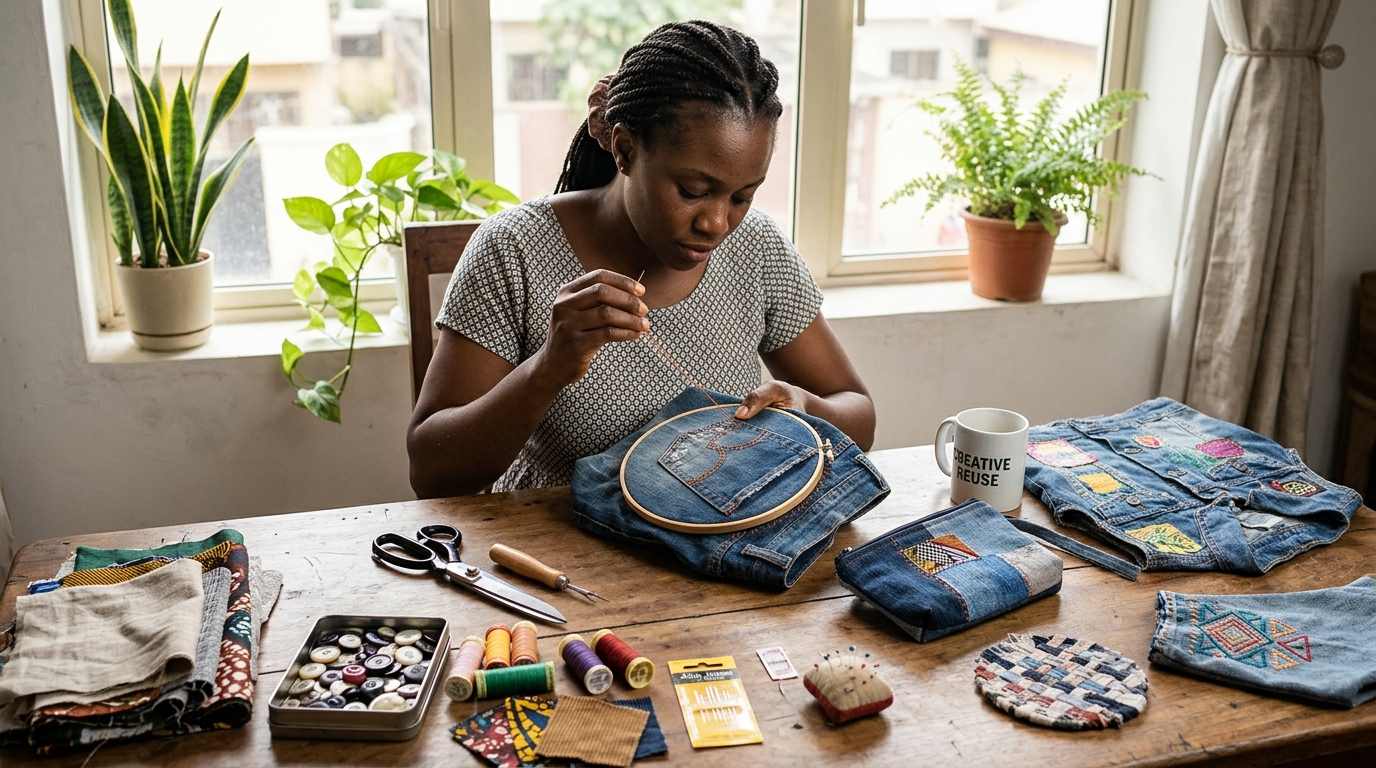
An oversized shirt can be redesigned into a cropped top, a long shirt can become a casual dress, and an old pair of jeans can be transformed into shorts, a skirt or a useful fabric bag.
You can also experiment with fabric patches, embroidery, buttons and simple alterations to give ordinary clothing a different appearance.
Start with clothes you no longer wear but that are still in reasonable condition. Practise on inexpensive pieces before attempting more complicated designs.
2. Give Damaged Clothes a Second Life with Visible Mending
Not every damaged piece of clothing needs to be discarded.
Visible mending is a repair technique that deliberately makes stitching part of the design. Instead of hiding a tear or worn section, you repair it with decorative thread, patches or carefully arranged patterns.
One popular technique is sashiko, a traditional Japanese stitching method that uses repeated running stitches to reinforce fabric and create decorative patterns.
It works particularly well on denim, jackets, trousers and other durable materials.
Beyond extending the life of clothing, visible mending can turn a damaged item into something distinctive.
3. Transform Old Fabric into Handmade Accessories
Leftover fabric from old clothes, curtains or sewing projects can become the starting point for several useful creations.
You could make reusable shopping bags, headbands, small purses, fabric bookmarks, cushion covers and decorative fabric flowers.
These projects are particularly suitable for beginners because many can be completed with simple cutting, folding and stitching techniques.
If you do not have a sewing machine, some smaller projects can be completed by hand.
4. Try Crochet and Handmade Decorations
Crochet is another creative hobby gaining attention, particularly as people explore ways to customise clothing and accessories.
With a crochet hook and suitable yarn, beginners can learn to make simple coasters, small bags, flowers, keychains and decorative pieces.
You can also combine crochet with existing belongings. For example, a simple crochet detail can give an old bag, cardigan or plain accessory a completely different look.
Start with basic stitches and small projects before attempting larger pieces. Online tutorials and beginner patterns can make the learning process easier.
5. Turn Empty Containers into Home Decorations
Upcycling is not limited to clothing. Everyday household packaging can also become useful decorative items.
Glass jars can be cleaned and reused as storage containers or simple vases. Suitable tins can become pencil holders or plant containers, while cardboard boxes can be redesigned as organisers.
A little paint, fabric, rope or decorative paper can make these objects look more intentional.
However, make sure containers are thoroughly cleaned and safe for their intended purpose. Avoid using materials that previously held hazardous substances for food, drink or household items that require direct contact.
6. Make Handmade Jewellery and Personal Accessories
Small accessories are another accessible way to explore DIY crafts.
Old beads, unused jewellery, fabric scraps and other suitable materials can be combined to create bracelets, necklaces, earrings and bag charms.
You can also experiment with simple clay charms, decorative buttons and fabric details.
Pinterest's 2026 report highlights growing interest in handmade accessories, including clay bag charms and beaded bag charm projects.
These creations can be made for personal use, gifts or, with consistent quality and thoughtful presentation, small creative business experiments.
7. Create Small Decorative Pieces from Leftover Materials
Sometimes the most interesting DIY projects begin with materials that appear to have little value.
Small pieces of cardboard, leftover wood, unused fabric, paper and other suitable materials can become miniature room decorations, picture frames, storage organisers and handmade display pieces.
One emerging direction in beginner crafts is miniature making. People are experimenting with tiny rooms, dollhouse furniture and miniature objects created from ordinary materials.
These projects can be particularly enjoyable because they encourage attention to detail and creative problem-solving.
How to Start Upcycling Without Spending Too Much
The easiest way to begin is to work with materials you already have.
Look around your home. Check your wardrobe, storage boxes and household items for materials that can be repaired, reused or transformed.
Choose one simple project. Avoid starting with something that requires advanced sewing, specialised tools or expensive materials.
Gather basic supplies. Depending on the project, you may need scissors, needles, thread, fabric glue, paint, brushes, a measuring tape or a crochet hook.
Learn one technique at a time. Follow a beginner tutorial and practise before attempting a more complicated design.
Focus on finishing. Neat stitching, clean edges and careful finishing can make a simple handmade item look much more professional.
Keep experimenting. Not every project will turn out exactly as expected. Treat early attempts as opportunities to learn rather than reasons to give up.
Can Upcycling Become a Small Business?
For people who enjoy making things, upcycling can eventually become more than a personal hobby.
Handmade bags, customised clothing, repaired denim, jewellery and decorative accessories can all become potential products.
However, turning a hobby into a business requires more than creativity. You need to understand the cost of materials, the time required to complete each item, product quality and what customers are willing to pay.
Start by making a few products, documenting the process and showing the finished results to potential customers.
Social media can help creators demonstrate how ordinary materials become finished products. Before-and-after photographs and short transformation videos can also make the creative process more interesting to follow.
The important thing is to build gradually and avoid investing heavily before understanding whether there is demand for your work.
Upcycling in Nigeria: Making Creativity More Practical
Upcycling has interesting possibilities for Nigerian households and creative entrepreneurs.
Old clothing, fabric remnants, containers and other reusable materials can provide affordable starting points for personal projects.
For example, a tailor could use leftover fabric to create smaller accessories, while someone interested in fashion could customise thrifted clothing with embroidery, patches or other details.
There are also opportunities to explore handmade home decorations, reusable shopping bags and locally inspired accessories.
The materials and techniques will vary depending on availability, but the underlying idea remains the same: making better use of resources that might otherwise be discarded.
It is important, however, to distinguish genuine upcycling from simply turning waste into another disposable product. A useful project should be reasonably durable, safe and practical for its intended purpose.
A Creative Hobby That Gives Old Things New Meaning
Upcycling offers a refreshing alternative to the idea that everything must be replaced when it becomes old, damaged or unfashionable.
A little creativity can turn an unused shirt into a new outfit, a worn pair of jeans into a handmade accessory or an ordinary container into something useful around the home.
You do not need to be an expert or own expensive equipment to get started. Choose one item, find a project that interests you and learn as you go.
Sometimes, the most interesting thing you can make is not something new. It is something old, transformed by your own hands.
Backyard Garden Makeovers: DIY Ways to Turn Small Outdoor Spaces into Beautiful Green Retreats
Next Dispatch →Why Protein-Rich Meals Are Becoming One of the Biggest Food Trends of 2026
Discussion (0)
Technical commentaryLeave a Reply
No comments yet. Be the first to share your thoughts!